


Service Design Intern Project - Reserve Bank of New Zealand
Supervised by Tali Maulgue and Kate Johnson
An internal tool created by reimagining the Value Proposition Canvas to better address the Aotearoa and public sector contexts when creating value propositions
The Value Proposition Canvas (VPC) is a useful tool for businesses to identify the value offered by a proposed product or feature to their customers. Despite this canvas’s great potential in assisting RBNZ in navigating the transaction innovation space, its American origin and design for the commercial sector restrict its adaptability to the goals of public sectors in Aotearoa.
HMW visualise the co-creation between RBNZ and cohorts of Aotearoa to guide users in creating human-centred and non-commercial value propositions?
With the project goal of reimagining the Value Proposition Canvas, we must first understand the precedent’s features and functions in depth. Furthermore, review the critiques of the tool and analyse alternative canvases.
In addition to the preliminary readings completed prior to this project, we will gather information on the bank, specifically using the Value Proposition Canvas and similar tools. Insights from experts will be valuable in clarifying the direction needed for ideation and prototyping.
As part of the project’s key objectives, we need to research approaches to Te Ao Māori principles and identify how they could be utilised effectively in the reimagining. As a non-Māori designer, it is also crucial to be aware of my positionality to ensure that my research and design decisions respect and honour Te Tiriti o Waitangi.
New headings and prompts for each section provide embedded onboarding to new users, which the original canvas lacked with its minimalistic design. However, facilitation is still recommended for first-time users.
Reworking the right side of the canvas accounts for the nuances of policy and challenges in the non-commercial context addressed by RBNZ instead of identifying Market-Product Fit in the original.
The layout of the redesigned canvas takes inspiration from the He Awa Whiria research framework, which encourages the bank to create value propositions with a human-centred lens by drawing from two streams of knowledge and aligns with the policy objectives of financial and social inclusion. Furthermore, the values of Matangirua ki Matangireia play an active role in the Value Proposition Cards.

With a defined list of design objectives informed by my research, two senior service designers and I explored how divergent this reimagining could be. All while maintaining the core function and usefulness in creating value propositions.
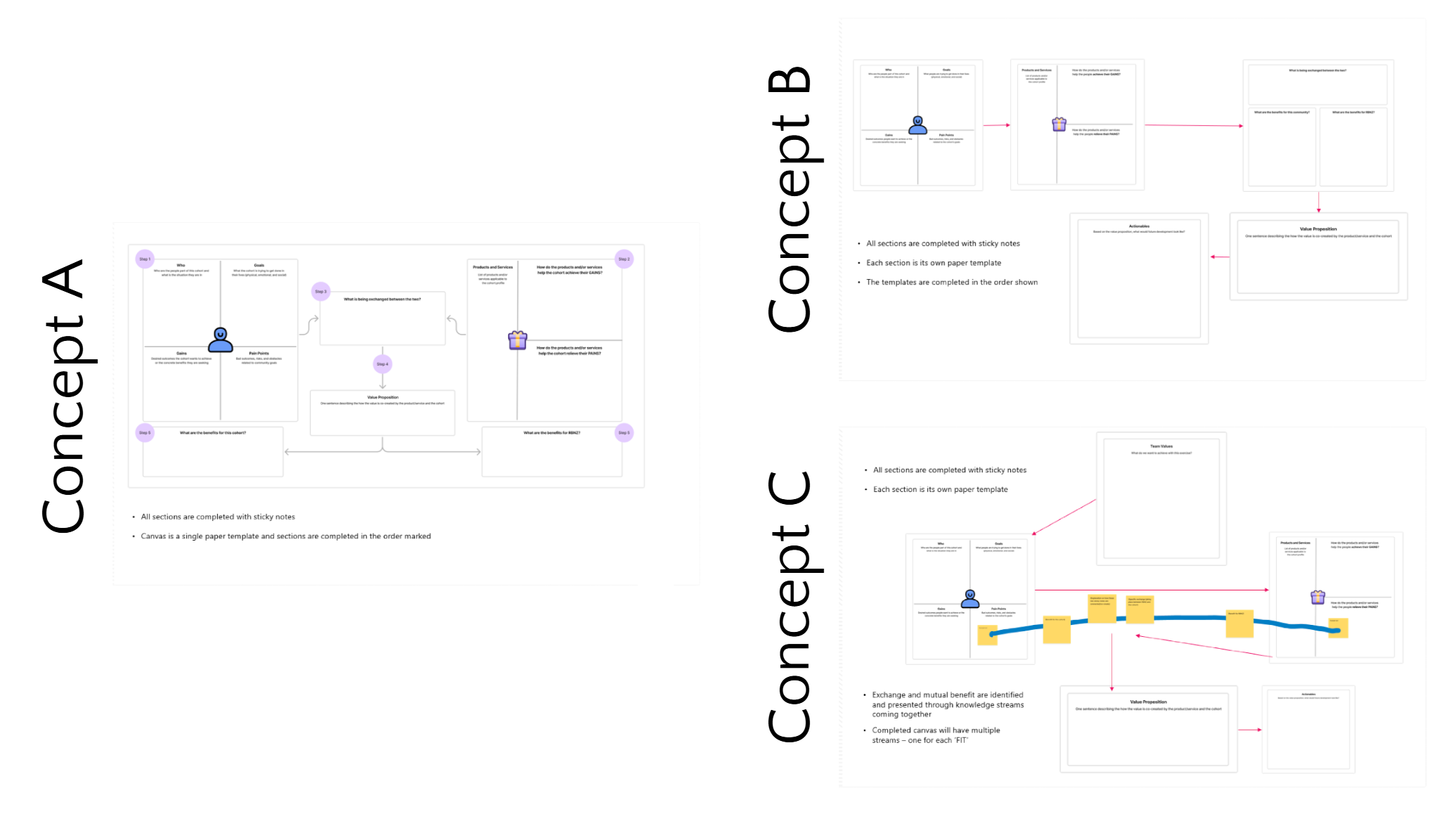
Three of the eight canvas concepts were chosen to be refined for review and feedback from six stakeholders. This session was done through an online meeting where they could comment on their interpretation, questions, and feedback on the concepts.
From the 52 comments of feedback and questions given during the review, the key themes were: further clarity on how exactly the canvas is used in-person, differentiating the purpose of similar sections like goals and gains, reworking the sections for easier application of non-commercial contexts, and the further engagement of Te Ao Māori values in the canvas.
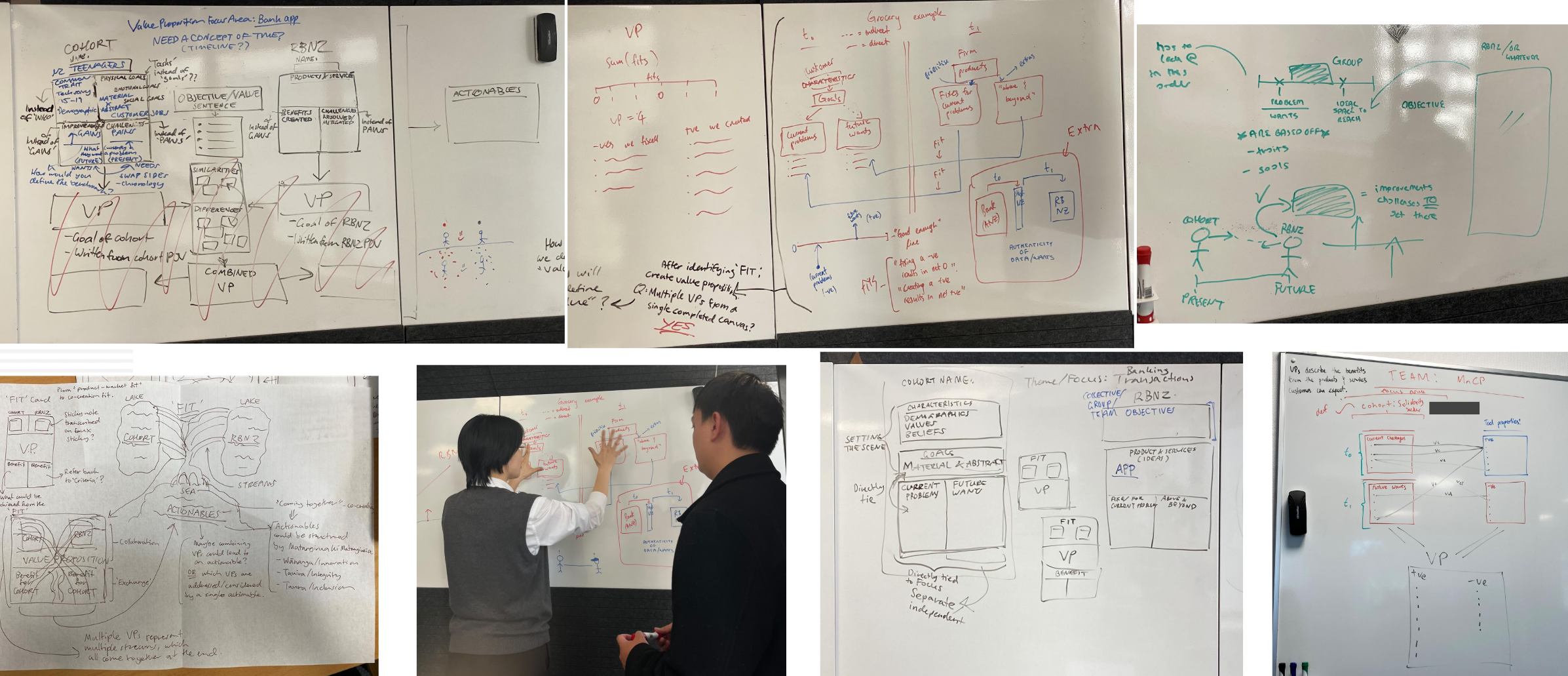
Turning the feedback into a new set of design objectives, I went through five more rounds of ideation, but this time with input from other interns at the earlier stage.
This second round involved combining each concept's strengths to generate new ideas. A highlight of this project, this collaboration helped bring new perspectives into the reimagining and made the canvas easier to understand for all people. After receiving feedback on the final paper concept, I made the required edits and created the digital canvas for testing in a usability workshop. The key objectives of this round of ideation were:
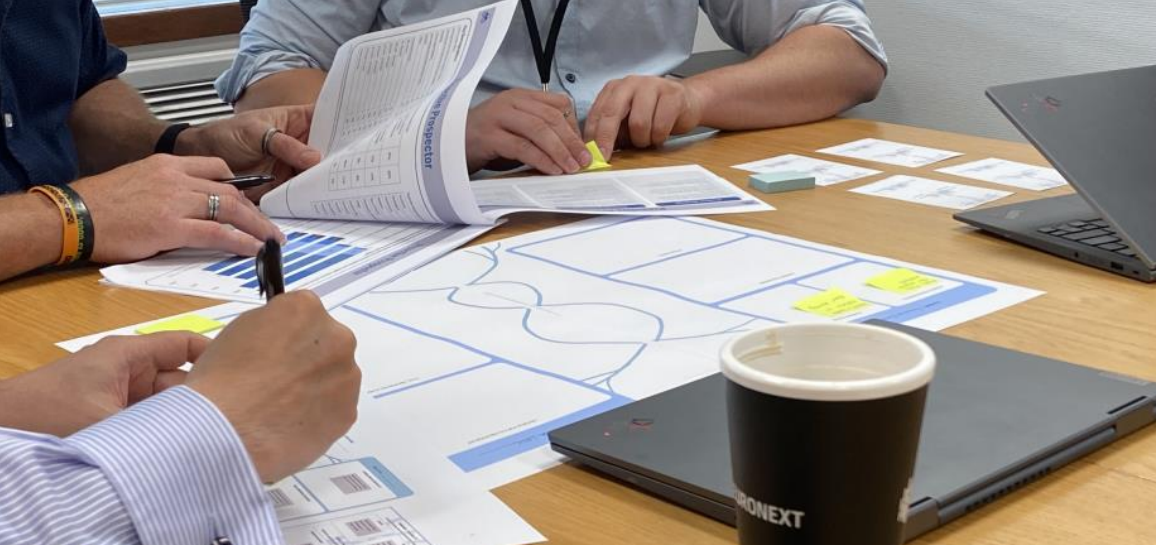
Unlike reviewing static presentations of the design concepts in the first round, this usability workshop involved using and completing the entire canvas from start to finish. Six participants from CBDC development or Service Design were split and mixed into two groups, and each group had a go at creating value propositions for the NZ transaction context.

The workshop was super insightful since we got to see the reimagined value proposition canvas in practice. We made further refinements from my observations and the direct feedback from stakeholders.
From the feedback provided on the canvases and during the reflection portion of the workshop, the key objectives of this ideation are:
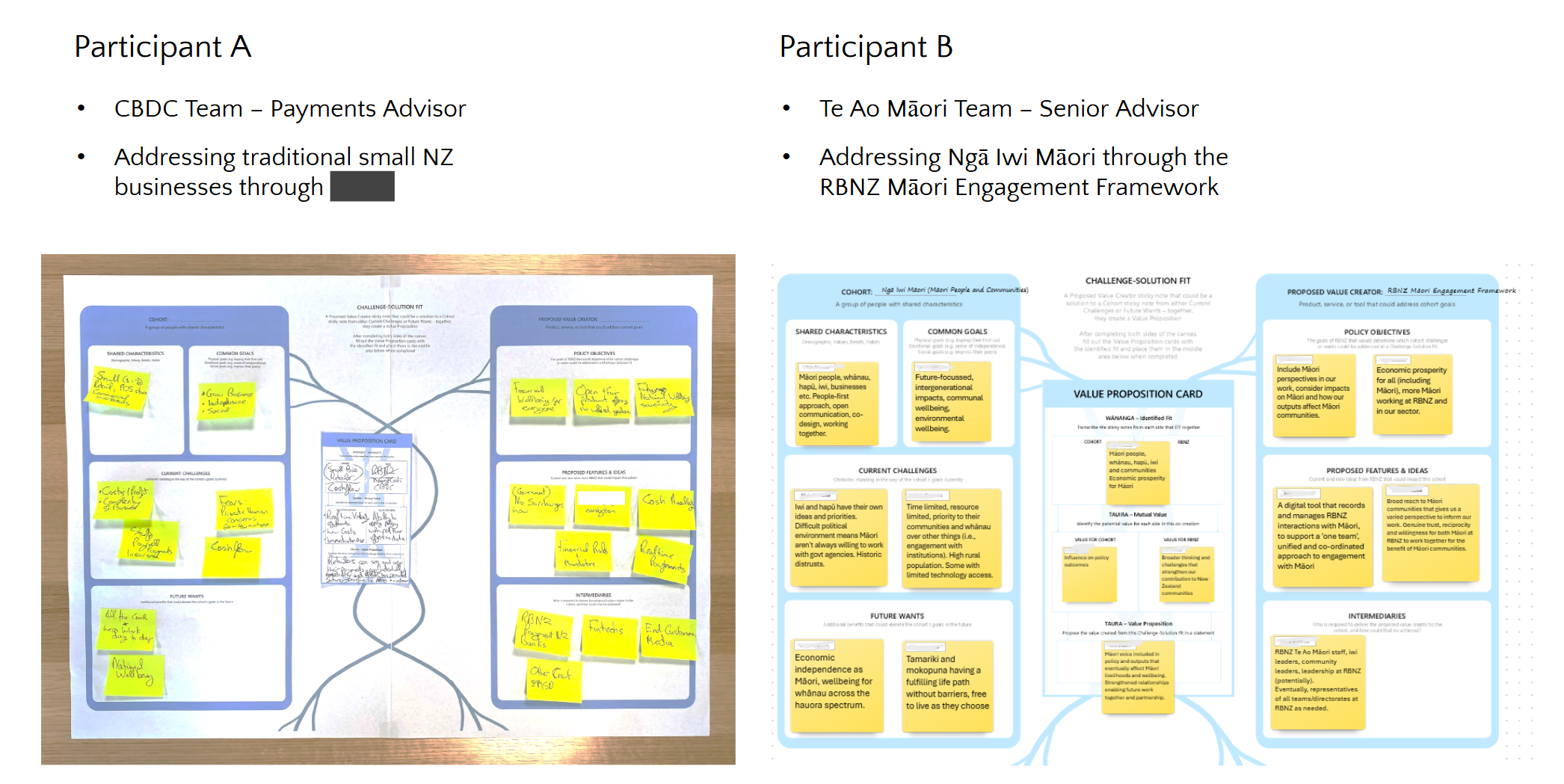
The final usability test done for this project was to see how the canvas would be used as an individual activity. During the group workshop, people liked to check their ideas with each other first before putting down a sticky note, while individuals would brainstorm and put everything down as they completed the canvas.
Alongside the specific pieces of feedback for additional refinement, a new crucial component is the need for a facilitator. While the canvas is designed with an integrated onboarding experience, stakeholders found it most helpful to have a facilitator to ensure they complete it correctly. After the first canvas, however, stakeholders feel confident in completing future ones independently.
Across the two individual usability tests, the key insights for refining the canvas were:
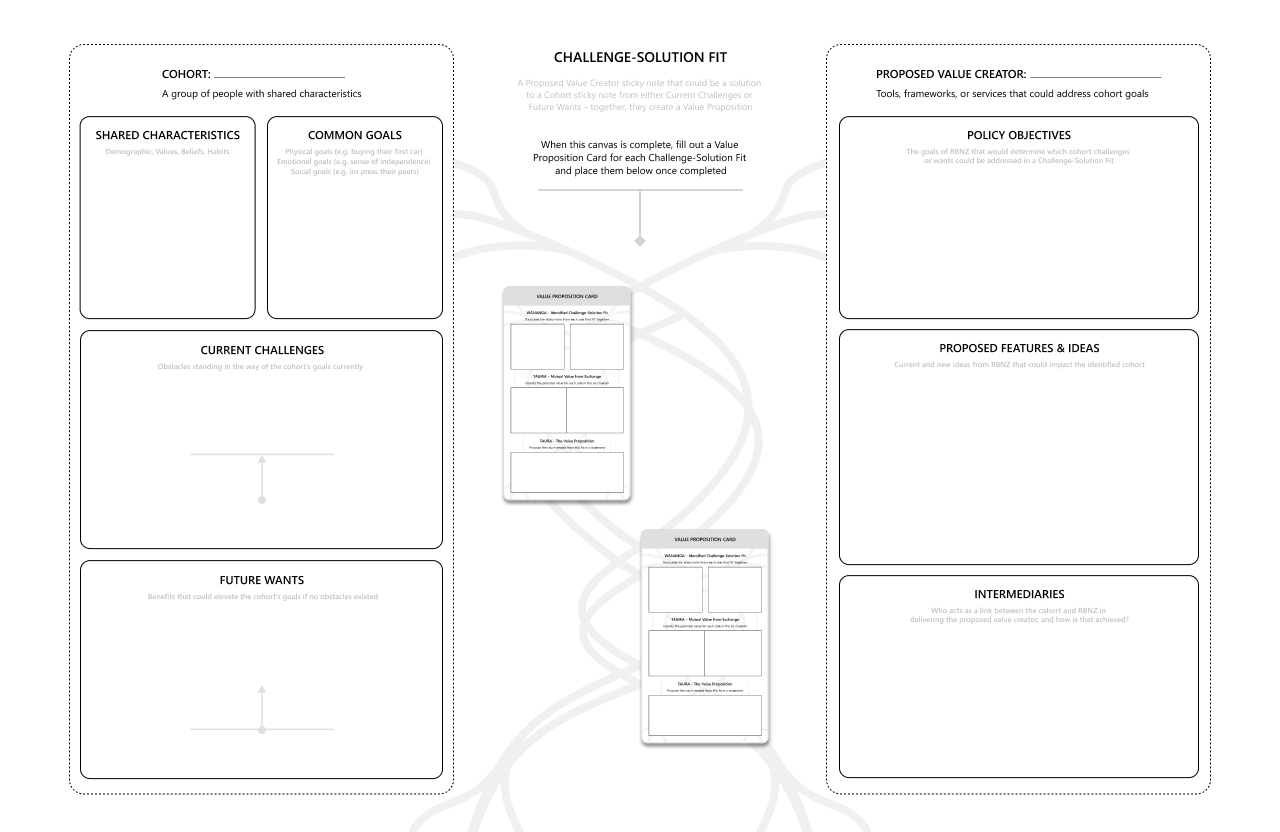
This Reimagined Value Proposition Canvas is designed to be suitable for working with policy and non-commercial challenges at RBNZ. The main inspiration for the layout of this canvas is the He Awa Whiria framework, where a solution is created through the rivers intertwining from two pools of knowledge. Each section’s function, layout, and canvas graphics visualise the co-creation and value of reciprocity in creating value propositions for the people of Aotearoa.
The braiding of rivers in the middle of the canvas is where you will place the Value Proposition Cards with the identified Challenge-Solution Fit and mutual exchange. With the completion of this tool, the value propositions are created with a human-centred approach and lead to actionable insights that align with RBNZ’s policy objectives.
Key features of this canvas are: